Tissue Therapy: How the Discoveries of Academician Filatov Are Evolving in Russia in 2026
According to expert forecasts, the biotechnology market is expected to reach 1 trillion rubles by 2036. Elena Dibrova, President of the V.P. Filatov International Foundation for Biomedical Technologies Development, discusses the emergence of biotech in our country, its pioneer, its achievements, and the opportunities biomedicine opens up for everyone. About the expert: Elena Dibrova, President of the V.P. Filatov International Foundation for Biomedical Technologies Development, healthcare organizer, member of the Healthcare Expert Council under the Federation Council Committee on Social Policy, Academician of the Russian Academy of Natural Sciences (RANS), Ph.D. in Economics.
The History of the First Biomedical Product
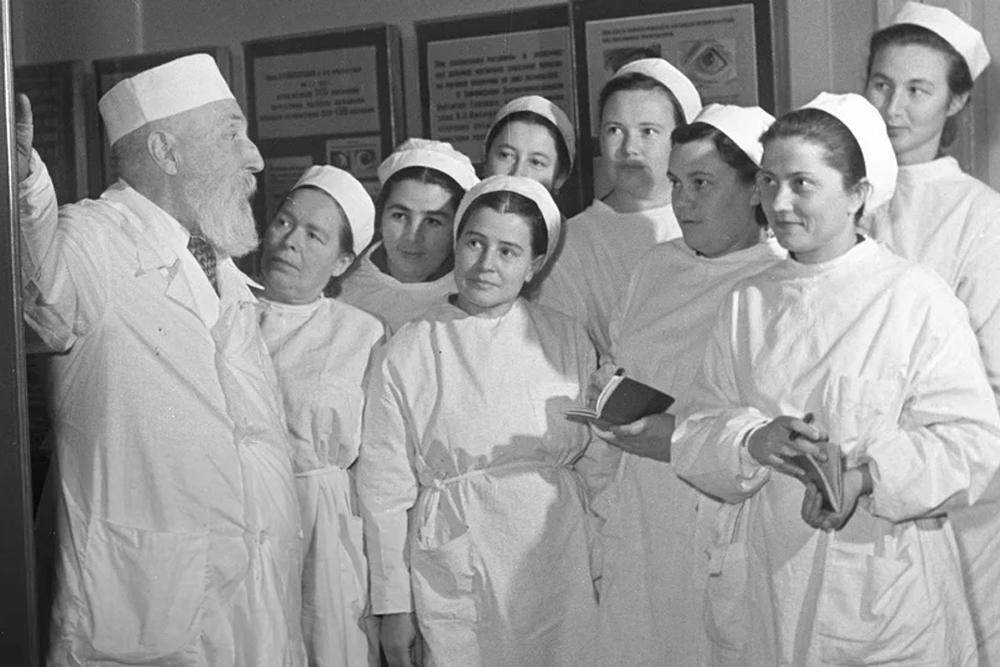
February 27 marks the 151st anniversary of the birth of Academician Vladimir Filatov, the founder of tissue therapy principles, whose ideas evolved into a distinct field ― regenerative medicine.
Filatov was the creator of the “placenta extract” drug, known today as placenta hydrolysate. It is widely used as an immunomodulator and hepatoprotector in more than 40 countries across the globe, from Iran to Canada. In Japan, placenta therapy has been integrated into the public healthcare system since the 1950s to treat over 80 diseases.
Filatov’s breakthrough was accomplished within a narrow medical specialty ― ophthalmology; however, the pioneering hypothesis found applications across numerous fields of medicine: surgery, internal medicine, gynecology, neurology, gerontology, and others.
– For many years, Vladimir Filatov worked on perfecting penetrating keratoplasty ― transplanting a donor cornea to trachoma patients. Replacing the damaged area was meant to restore vision. However, grafts often failed to take, and the cornea clouded over. Showing patience and persistence, Filatov discovered that tissue placed under extreme conditions produces adaptogens. Filatov termed them “biogenic stimulants.” When introduced into an organism, these substances enhance host defenses, accelerate metabolic processes, and stimulate tissue healing, which laid the foundation for tissue therapy. The world’s first successful penetrating keratoplasty procedure was performed by the scientist on May 6, 1931.
Elena Dibrova
President of the V.P. Filatov International Foundation for Biomedical Technologies Development
The novel graft preparation technique solved the acute shortage of donor tissue, allowing the surgical procedure to be widely adopted into clinical practice. The scientist continued developing his ideas in tissue therapy, leading to the innovation of placenta extract.
The preparation process involved preserving the tissue for 6–7 days at a temperature of 2–4 degrees Celsius. Filatov began advocating tissue therapy as a universal therapeutic approach and emphasized that the human body possesses enormous self-healing potential;
it only needs a helping hand.
How Biotechnologies Were Applied in the USSR
During the Great Patriotic War, Academician Filatov actively utilized placenta extract to treat severe wounds and burns in soldiers, stimulating rapid tissue regeneration.
Post-war Order No. 100 of the USSR Ministry of Health, “On the Wide Implementation of Tissue Therapy According to the Method of Academician Filatov in Treatment and Prevention Facilities of the USSR,” opened broad horizons for this innovation. In the 1970s–1990s, tissue therapy was utilized in our country to boost athletic performance, as well as to maintain the health and vitality of politicians and public figures.
– Tissue therapy is prescribed based on each patient’s unique anatomy and physiological status, targeting the root cause of disease rather than just symptoms. This makes it possible to actively manage health, maintaining vitality and well-being throughout a person’s life.
Elena Dibrova
President of the V.P. Filatov International Foundation for Biomedical Technologies Development
Numerous scientific studies over the years have demonstrated that the placenta is a truly unique tissue. It serves as a reservoir of building blocks for most human proteins. It contains 20 amino acids, higher fatty acids, coenzyme Q10, cytokines (interleukins, interferons, growth factors), alpha-fetoprotein, a naturally balanced complex of vitamins (A, D, E, C, and all B-complex vitamins), immunoglobulins, essential trace elements (magnesium, manganese, zinc, copper, selenium, etc.), and enzymes.
In addition to placenta extract, Academician Filatov proposed plant-derived materials for tissue therapy: aloe leaves, cotton and pea sprouts, agave leaves, and others.
Thus, a single breakthrough became the foundation of an entire discipline ― regenerative medicine.
Modern Achievements of Tissue Therapy
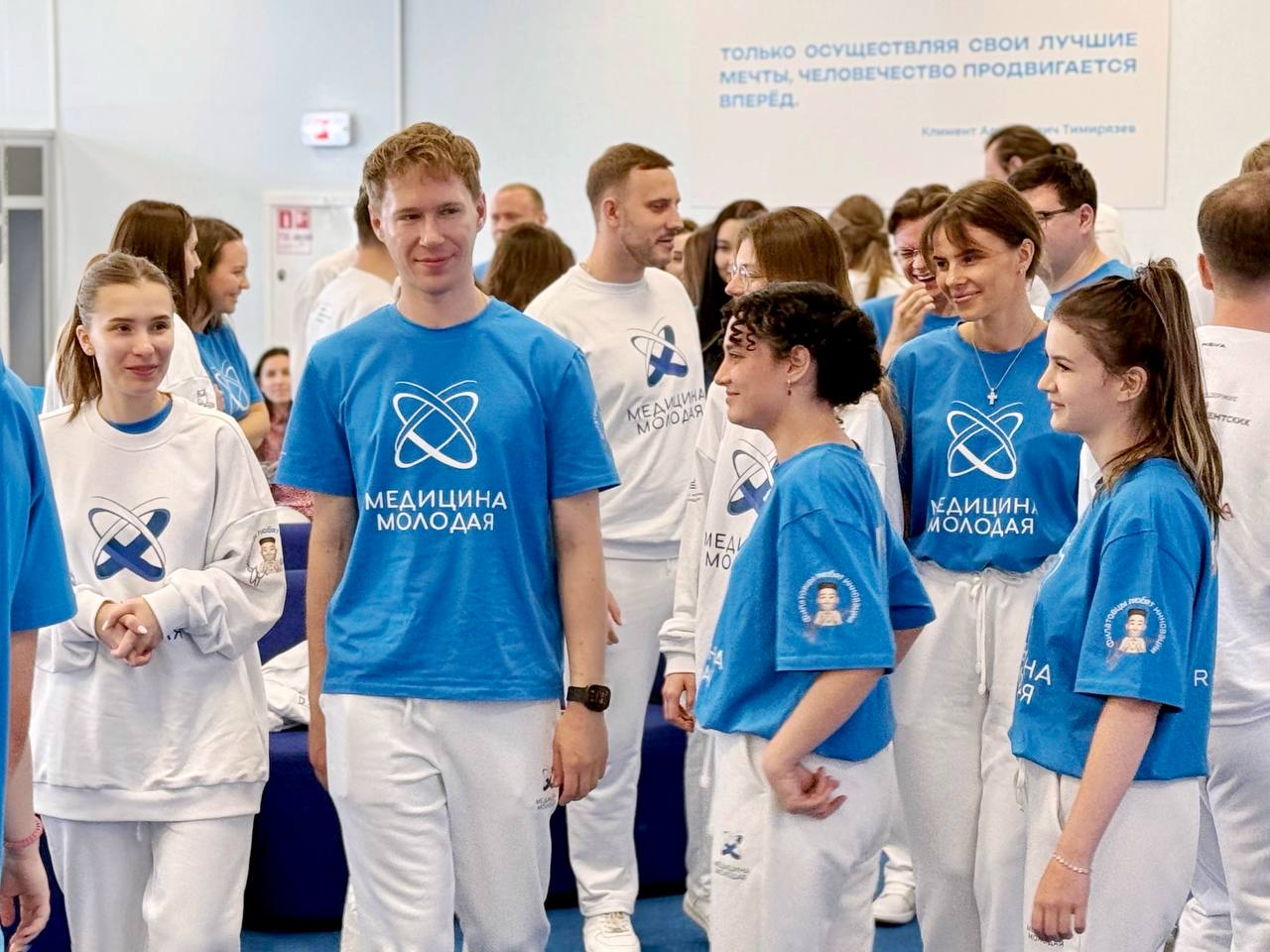
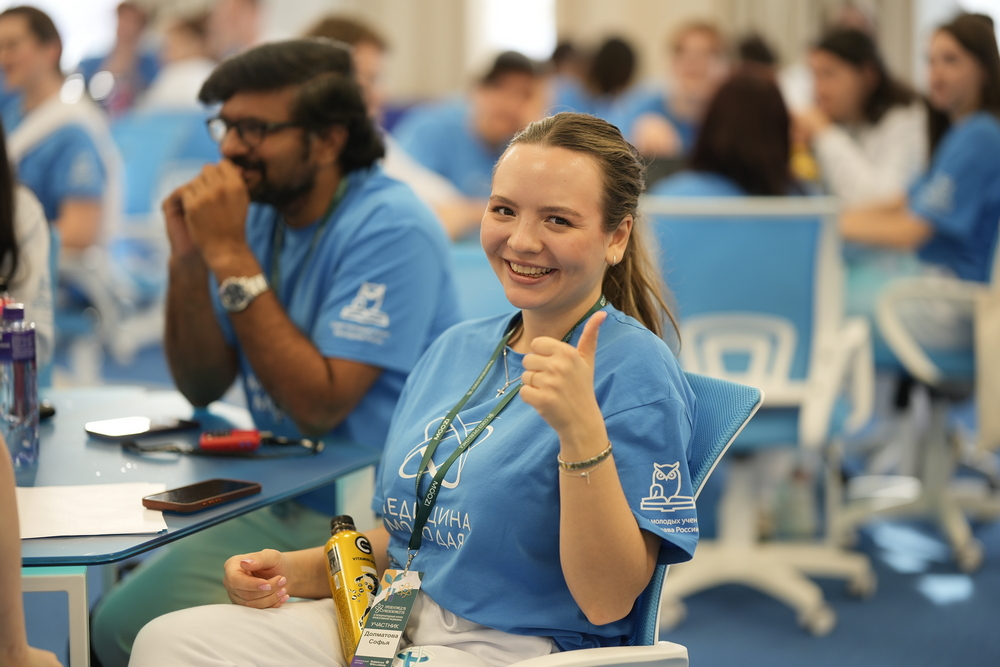
For six years, the Foundation bearing the name of Academician Filatov has been running the All-Russian Scientific School “MEDICINA MOLODAYA.” It is an ecosystem supporting young medical scientists. Every year, a scientific project competition is held for innovators, featuring a dedicated biotechnology nomination. Every year, compelling and practical solutions are showcased.
One notable example is “Fibrin Glue,” developed by Privolzhsky Research Medical University (PIMU). This product is in high demand in gynecology, as it features a pronounced hemostatic effect, controlled polymerization rate, high biocompatibility, and excellent tissue adhesion. Surgical interventions often require bleeding control techniques that can reduce a woman’s ovarian reserve. Innovative solutions help preserve fertility at high levels.
– Tissue therapy triggers innate self-repair mechanisms, enabling the treatment of conditions previously deemed incurable and unresponsive to surgical intervention or pharmaceuticals. In degenerative joint diseases, corneal injuries, and burns, methods of replacing lost tissue are already applied today. Tissues are cultivated in biobanks and laboratories. Living cell-based formulations will soon see much broader use. They can improve outcomes in cirrhosis and diabetic foot, and can be utilized to regenerate bones and ligaments as well as repair peripheral and central nerves. This is a distinct scientific discipline where expertise and breakthrough solutions are accumulating rapidly.
Elena Dibrova
President of the V.P. Filatov International Foundation for Biomedical Technologies Development
A series of innovative developments were presented by cadets of the S.M. Kirov Military Medical Academy (St. Petersburg). These include the project “Development of Technology for Obtaining and Characterizing the Composition and Properties of Lyophilized Human Amniotic Membrane for Ophthalmic Needs.” This tissue engineering product is designed to restore ocular structures during various ophthalmic injuries through its biological attributes ― adaptivity and regenerative capacity.
Military physicians are already successfully deploying several tissue therapy medical products in rehabilitation. These include formulations based on RGD peptides and humic substances. And developers from Pacific State Medical University propose treating wounds with a polyurethane matrix coated with titanium dioxide. Researchers at Kuban State Medical University have engineered a wound-healing dressing containing tenascin-C.
Today, regenerative medicine encompasses innovative suspensions, tissue-engineered constructs, gene and cell technologies, injectables and implants, artificial intelligence, and big data. It involves multidisciplinary teams: physicians, biologists, biochemists, biophysicists, biotech engineers, and even industrial designers.
Previously, Nauka Mail shared the story of how cardiac surgeon Vasily Kolesov performed an operation that became one of the most pivotal milestones in 20th-century medicine.