About Academician V.P. Filatov
Academician Vladimir Petrovich Filatov (1875-1956) – world-renowned Russian physician and scientist, great educator, prominent enlightener, founder of scientific ophthalmology, extraordinarily talented plastic surgeon, and progenitor of the domestic school of tissue therapy, which is actively advancing in modern global medicine.
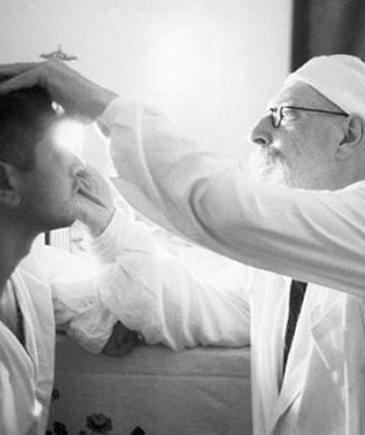
It was Academician V.P. Filatov who, through his works and research, established ophthalmology as an independent discipline. The profound discoveries of V.P. Filatov in restorative and plastic ophthalmology led the brilliant scientist to develop the theory of tissue therapy. At the foundation of the doctrine of tissue therapy lies a fundamental principle advanced and proven by the great Russian scientists whose student Filatov considered himself: Academician I.M. Sechenov and Academician I.P. Pavlov, regarding the leading role of the patient's own organism in the progression and outcome of any illness—which was also demonstrated through the method of tissue therapy.
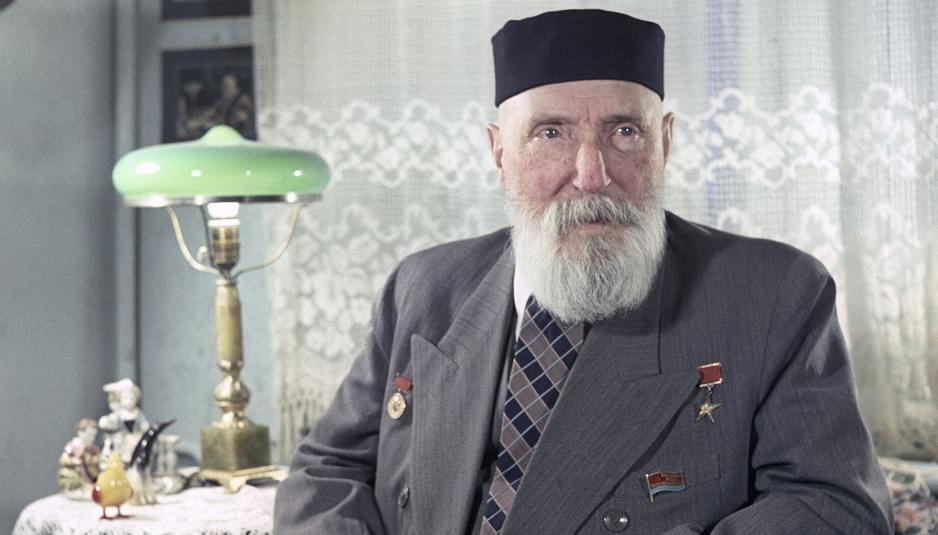

In recognition of his distinguished service to the Fatherland, Vladimir Petrovich Filatov was honored with

Socialist Labor
with the Gold Star medal
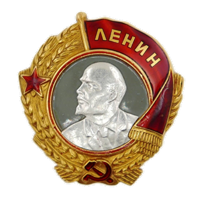
of Lenin
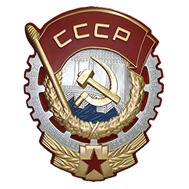
Banner of Labor
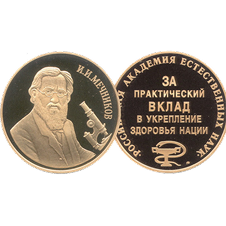
Grand Gold Medal
He was the most renowned physician in the USSR. A truly beloved people's doctor. He inherited love, respect, and genius from his father, zemstvo doctor Pyotr Fyodorovich Filatov, and his father's brothers, including Nil Fyodorovich Filatov, the founder of domestic pediatrics. V.P. Filatov received his medical education at the Faculty of Medicine of Moscow University, graduating with honors in 1897, where he was retained as a resident at the university clinic.
His initial steps as an ophthalmologist were connected with the oldest eye clinic in the world and Russia—the Moscow Municipal Eye Hospital. In 1903, by decree of the Russian Emperor Nicholas II, head of all Russian universities, he was delegated to establish the Department of Eye Diseases at the Imperial Novorossiysk University in Odessa. The department was established, and the assignment lasted for 53 years. From 1911, he headed the department for 45 years and lectured at the university for 53 years. Academician V.P. Filatov devoted all his energy and talent to establishing the Institute of Eye Diseases and Tissue Therapy. The internationally renowned institute became a testament to the fruitful cooperation between the state and science, as did the development of tissue therapy itself. The Institute of Eye Diseases and Tissue Therapy was founded by decision of the Council of People's Commissars in 1936, and by 1938 this major research and treatment complex was operational, receiving patients and advancing tissue therapy.
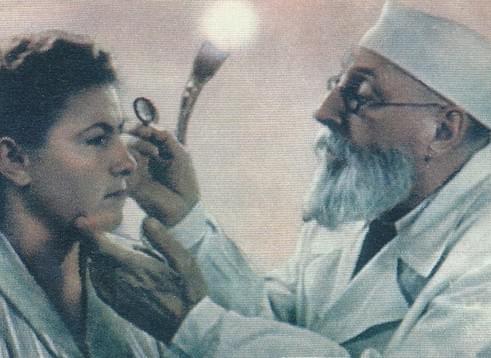
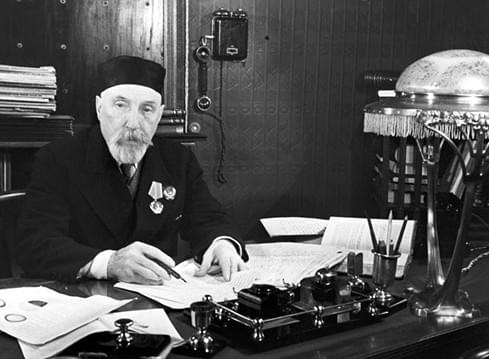
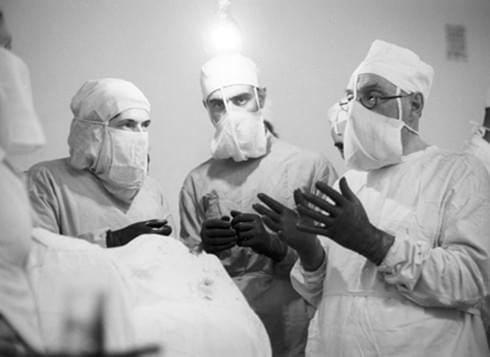
The year 2020 marked the 145th anniversary of the birth of the great physician and scientist V.P. Filatov. The Foundation's team faces the mission of not only studying and preserving his legacy, continuing his works and scientific investigations, but also re-establishing the scientific school of Academician V.P. Filatov. We must unite our efforts to celebrate the legacy of this remarkable man, perpetuating his memory as a shining example of devoted and sincere service to the Fatherland.
His life is tied to his homeland roots:
- the village of Mikhailovka in Mordovia, where he was born;
- Simbirsk/Ulyanovsk, where he attended gymnasium;
- Moscow, where he gained momentum and unfolded his talent as a great physician at Moscow University and Sechenov First Moscow State Medical University;
- Odessa, where he worked for 53 years.
Our goal is to ensure continuity between contemporary scientists and practicing doctors in carrying forward the scientific discoveries of Academician V.P. Filatov and popularizing his scientific school. We highlight the contribution of Academician V.P. Filatov to the development of biomedicine, reaffirming Russia's leadership in tissue therapy as one of the most promising frontiers of future scientific research.