FF TV Showcases Capabilities of Surgical Robots in Orthopedics
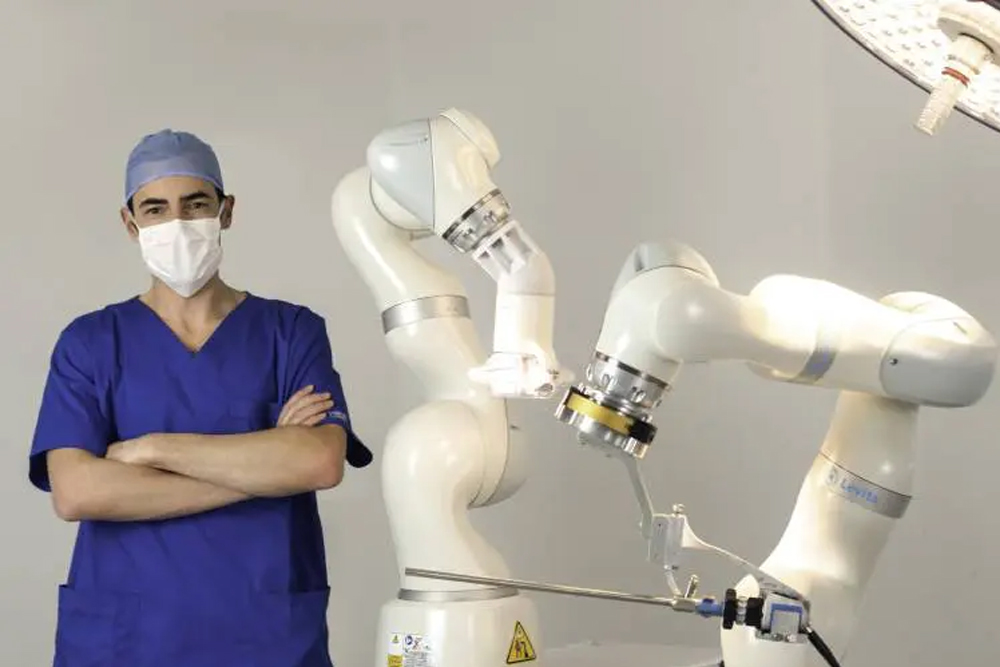
Engineers in the operating room. On February 10, the RuTube channel of the V.P. Filatov Foundation will release an episode titled “Surgical Robots in Orthopedics: New Frontiers.” Dmitry Igorevich Medvedkov, orthopedic trauma surgeon at the City Clinical Hospital No. 31 named after Academician G.M. Savelyeva (Moscow), will discuss the functionality, capabilities, and limitations of the Cuvis and Cori robotic systems.
These systems enable the creation of a personalized 3D surgical plan and accurate implant positioning, minimizing trauma, reducing postoperative pain, and expediting patient recovery. They also provide surgeons with guidance during bone resections (preparing the bone for implant placement) and other critical tasks. Continuous real-time monitoring minimizes the risk of improper implant positioning, which remains a primary reason for revision surgeries.
Dmitry Medvedkov noted that operating these systems requires specialized retraining not only for surgeons but also for nursing staff, with an engineer often joining the surgical team.
Robots serve as assistants rather than replacements for surgeons, even over the long term, Dmitry Medvedkov believes. That holds true even though the precision of robotic manipulators vastly outperforms human hands. For example, da Vinci instruments offer 7 degrees of freedom and rotate 540–560 degrees, allowing intricate minimally invasive procedures—such as prostatectomy and partial nephrectomy—through tiny incisions with minimal complication risks.
However, robots have a strictly “cold approach,” whereas empathy and humanity remain vital in the surgeon-patient relationship, the expert highlighted.
— In any event, AI will be employed for case analysis; it is already actively being integrated across the board for supplemental planning assistance. But not in the sense that a robot does everything autonomously while we simply roll it into position. In my view, robots will not replace human surgeons in the foreseeable future. In surgery especially, limitations persist, and robotic systems are fundamentally too detached. Robots will gradually reduce human workload in the process, but will never eliminate the physician entirely.
All FF TV episodes are geared toward a broad audience, introducing cutting-edge technologies applied in Russia that support health and longevity today.